Smart Read
Returns a compact structural view for eligible large source files while exact ranges remain available through the normal read tool.
Same four tools. Better engineering underneath.
Forge adds host-side safeguards, context efficiency and observability around Pi without adding tools, skills, commands, prompt text or model-facing messages.
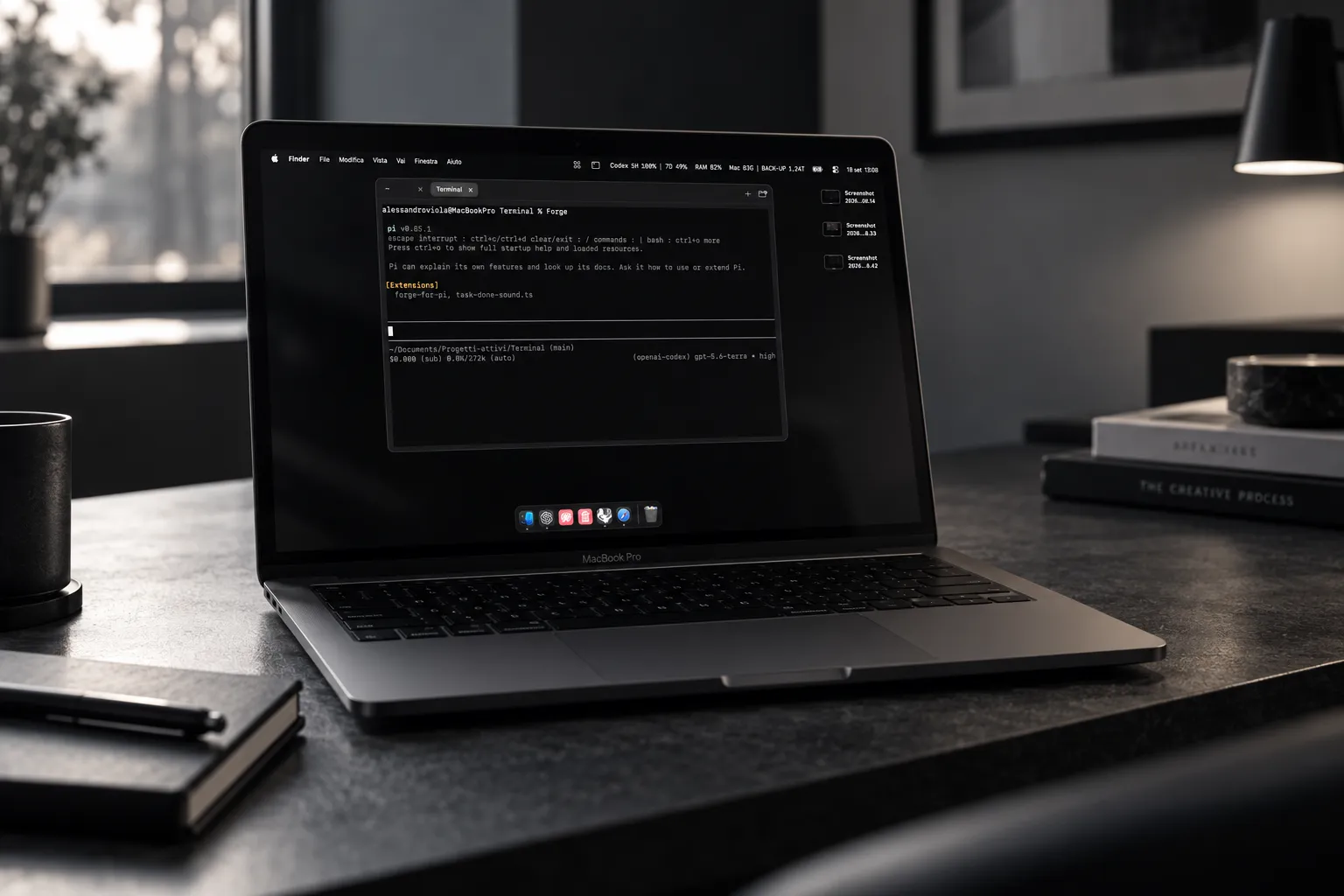
Plain Pi keeps its normal four-tool surface. Forge either replaces host-side implementations of existing tool slots or observes lifecycle events. If Forge is disabled, plain pi remains vanilla.
Returns a compact structural view for eligible large source files while exact ranges remain available through the normal read tool.
Adds scoped snapshots, seen-range validation, stale protection, a no-op guard and atomic edits without introducing a new tool.
Appends newly introduced local diagnostics after writes, with the first release focused primarily on Python and Ruff.
Conservatively packs large prior tool evidence host-side when doing so materially saves context.
Shows the observed lifecycle state Understand → Work → Finalize plus measured average output speed when Pi exposes final token usage.
Writes local metadata-only measurements only when tracing is explicitly enabled.
Forge stays behind Pi’s normal interface. The model still calls read, bash, edit and write; Forge strengthens selected host behaviors and renders local status without injecting hidden instructions into model context.
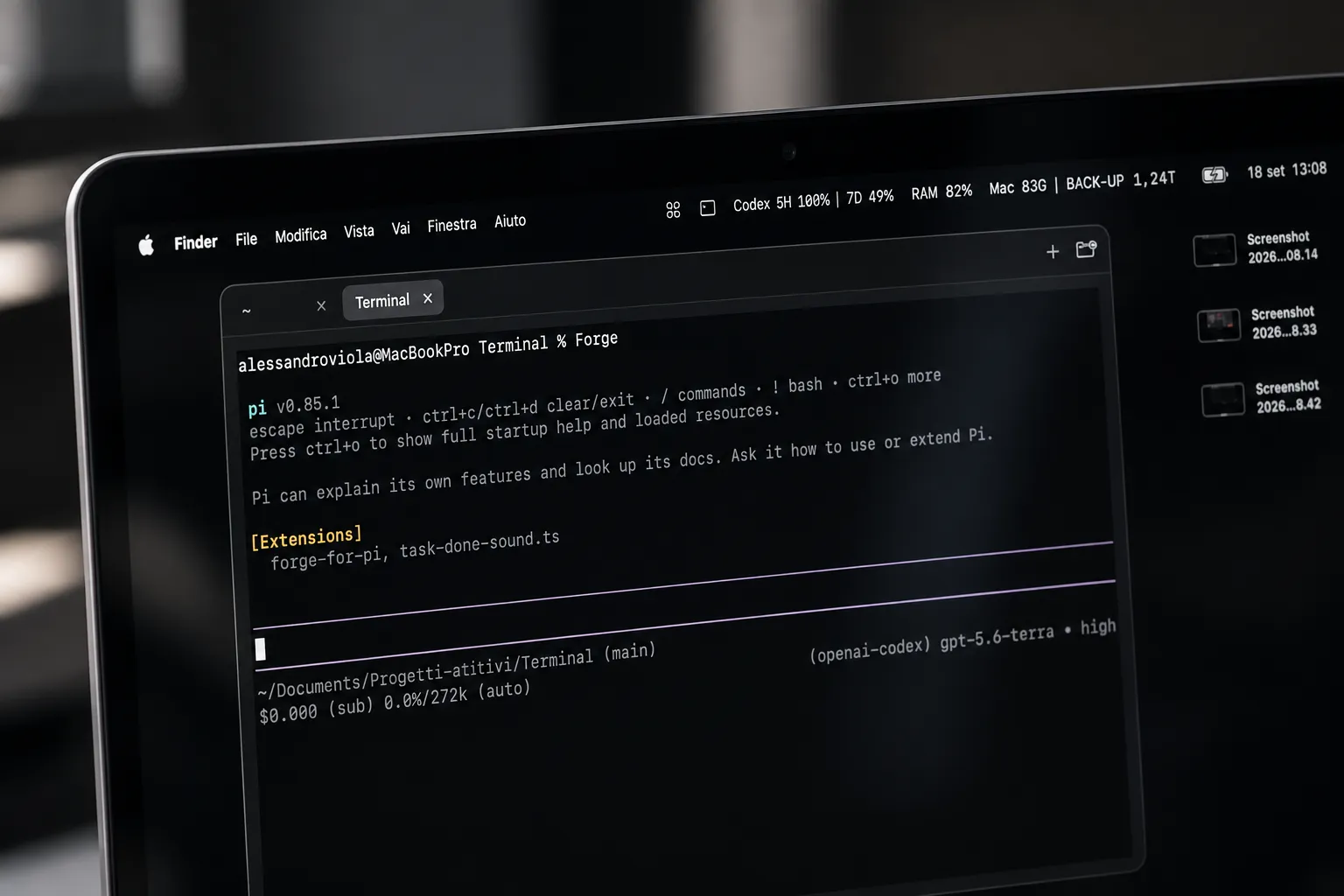
Forge reports only measurements recorded in the public benchmark and validation files. Results belong to their specific test scope and are not presented as universal improvements.
Specific Smart Read benchmark only.
Specific Smart Read benchmark only.
Snapshot Edit stale-protection evaluation.
Task Progress Monitor.
Snapshot Edit measured about +1.0% token overhead versus vanilla in its benchmark and avoided one false stale result. Reactive Diagnostics detected and corrected 1/1 introduced Python error with 0 false positives in the available tests.
The extension activates only when FORGE_FOR_PI=1. Components either replace an existing host implementation or observe lifecycle events; the component guard prevents duplicate registration.
Pi model
  │
  ├─ read
  ├─ bash
  ├─ edit
  └─ write
      │
      ▼
Forge host layer
  ├─ Smart Read
  ├─ Safe Snapshot Edit
  ├─ Reactive Diagnostics
  ├─ Context Intelligence
  ├─ Task Progress Monitor
  └─ Optional local telemetry

No new tools · No hidden prompt · No model-facing messages
The one-row TUI intentionally avoids completion percentages, ETA, hidden checks or recovery counters. Reads and inspection stay in Understand; a direct edit or write moves the row to Work. Final average tok/s is shown only when Pi exposes finalized output-token usage.
The installer copies the extension into Pi’s user extension directory, creates Forge-managed launchers in ~/.local/bin and leaves unrelated Pi configuration untouched.
Download v1.0.2FORGE_FOR_PI_TRACE=1 enables local metadata-only measurements. Forge does not collect tool content, CPU/RAM data or process lists in this release.
Unsupported files, unavailable diagnostics and host-processing errors preserve native Pi behavior. Forge adds no skill, system prompt, prompt template or model-facing message.
Forge for Pi is released under the MIT License. It is an independent project and is not affiliated with or endorsed by Pi’s maintainers.
Forge for Pi v1.0.2 is available as a public release and remains intentionally opt-in.